
It could happen in an instant.
In the middle of a brutal cold snap, the heat in Tawes Hall begins to drop. Students pull on hats and zip up coats as the temperature slides lower and lower. Before long, it’s too cold to continue, and classes spill into the hallway. The building manager knows what comes next if no one steps in — dangerously low temperatures, the risk of burst pipes, and costly damage. But in a situation like this, the Customer Response Center (CRC) would already be in motion, coordinating the right teams to get the heat restored before things spiral.
Meet the Team that Keeps Campus Moving
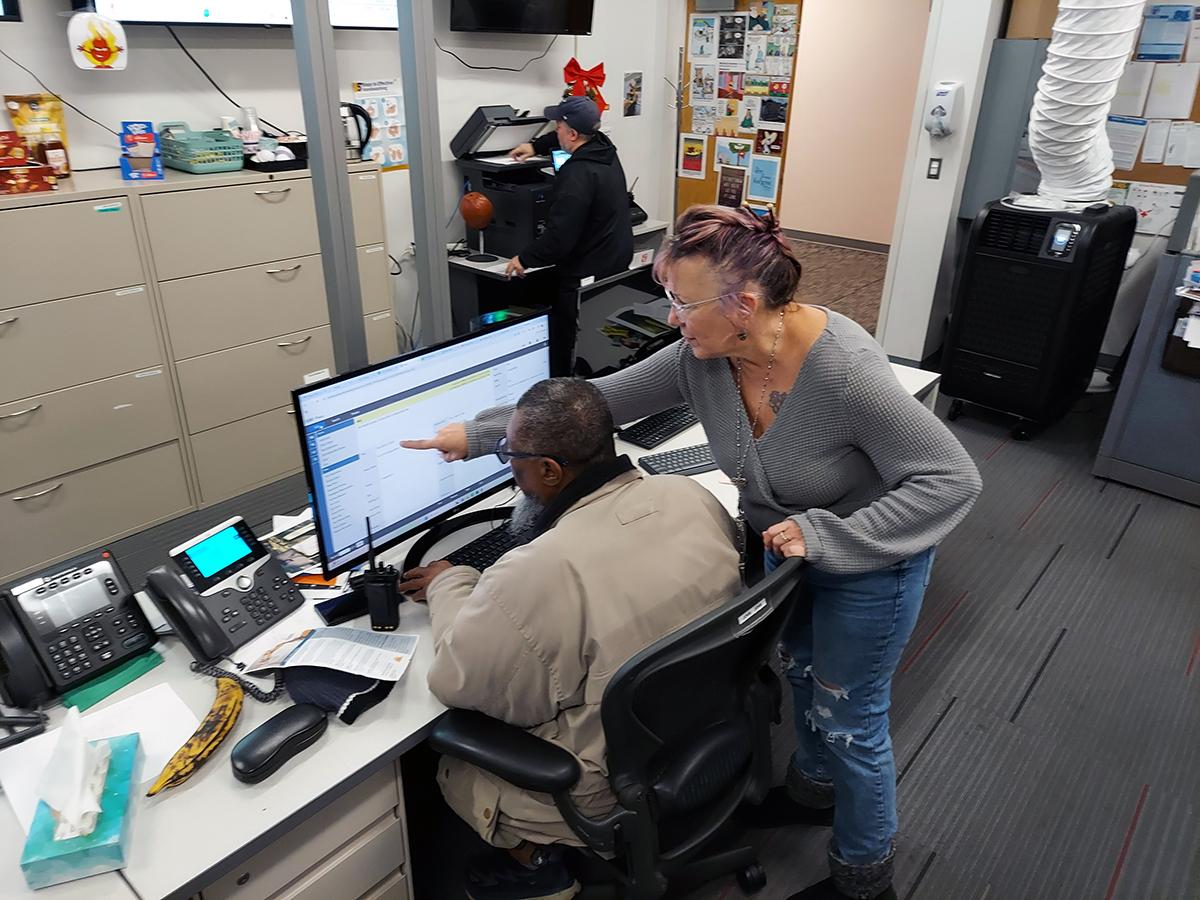
The CRC is a small but mighty team — fewer than ten people — who stay closely attuned to what’s happening across campus at any moment. Some have been doing this work for more than 15 years, guiding newer team members with steady experience and calm judgment. They monitor building temperatures, fire alarms, water-pressure changes, and flood alerts, all while fielding service requests that come in by phone, email, and through Facilities Service Central, FM’s online service portal. When something goes wrong, this is the team that answers first — the nerve center that connects the campus to the responders who can fix the problem.
The Essential Heartbeat of Campus
When the phone rings at the CRC (and it rings constantly), the team never knows what’s coming next. It might be a leaking pipe, a sudden power outage, a flooded mechanical room, or an HVAC failure threatening research equipment. It could be an elevator stuck between floors, a blocked ramp, or a sidewalk closure that affects campus accessibility.
As Michele Rychwalski, recently retired Manager of Communications notes, “We need to be sensitive to make sure that everyone has a way to get where they need to be,” When a call for help comes in, the CRC team acts immediately, whether it is a major crisis or a minor incident. The CRC also fields complex requests that don’t fall neatly into any one category.
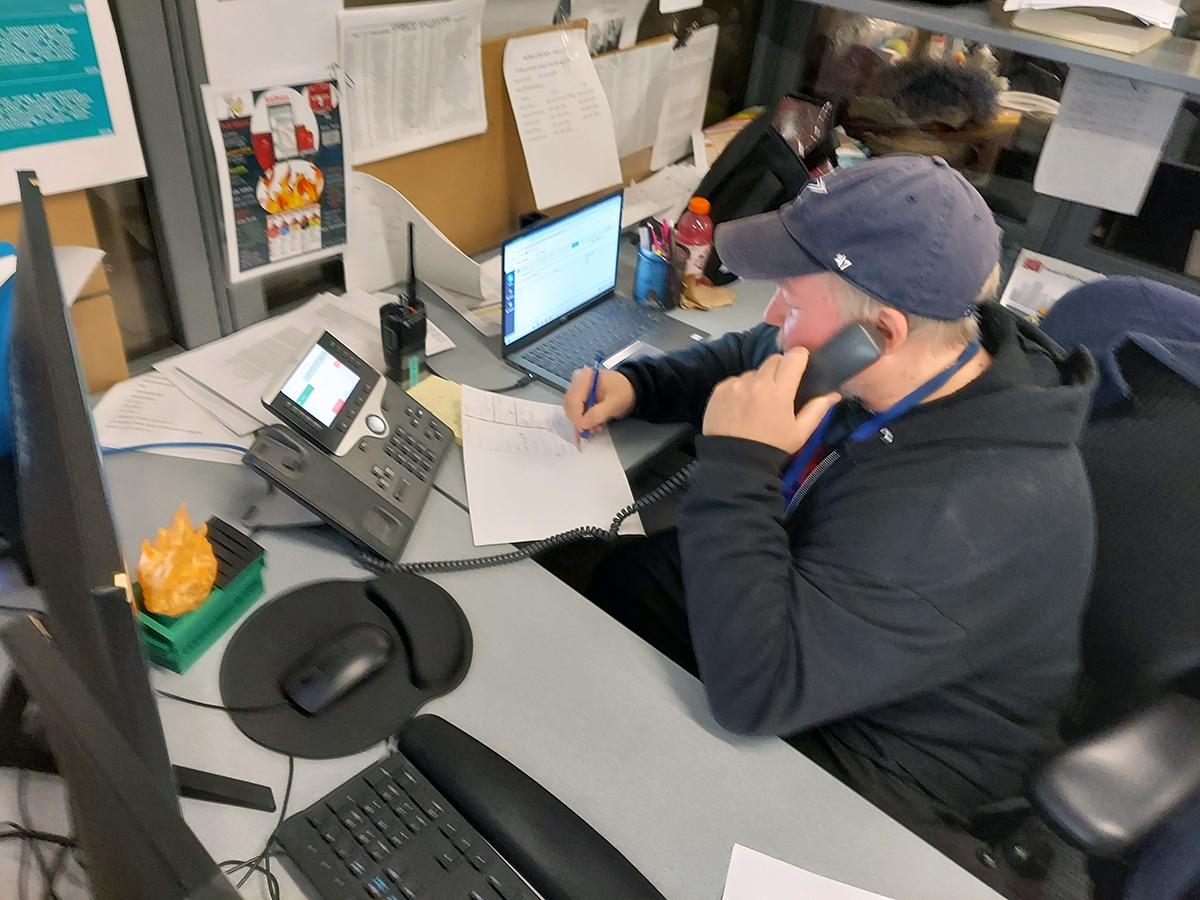
Once a call comes in, the CRC quickly confirms what’s happening, reaching out to FM’s Area Maintenance group for routine daytime issues or FM’s 24/7 Incident Response Unit (IRU) after hours or for urgent situations. With constantly updated contacts at their fingertips, they can reach the right technicians for the problem within seconds. And as technicians head out, the CRC is already preparing to alert the campus if access, safety, or operations will be affected.
How They Make Order Out of Chaos
All of this sounds neatly planned and orchestrated — and it is. But even the best plans can fall apart in the face of a real-time crisis. Severe summer storms are a perfect example. High winds and lightning strikes can knock out power to multiple buildings. Downed trees can block sidewalks and ramps, creating sudden accessibility challenges. In moments like these, the CRC is coordinating multiple moving parts at once — gathering information, directing FM crews, and keeping the campus informed.
To do this well, CRC team members rely on a rare blend of strengths. They stay calm and organized under pressure, ask the right questions when callers are anxious or unsure, and make quick decisions that guide FM’s response. As Michele notes, “The toughest part isn’t just the calls — it’s everything happening at once. You’re documenting, writing work orders, dispatching technicians, and juggling new emergencies all at the same time.”
The Difference CRC Makes — Every Single Day
Without the CRC’s timely actions, everyday disruptions could turn into campus-wide problems. Terps may face unpleasant, sometimes dangerous situations: offices or classrooms without power, restrooms without water, rooms that are sweltering or freezing. Wheelchair users would have to fend for themselves to find a way around closed or damaged sidewalks and ramps
CRC ensures that the campus knows what’s happening before anyone is caught off guard. A sudden outage, a blocked entrance, or an inaccessible route can ripple quickly across a university the size of UMD. CRC’s quick coordination keeps those moments from escalating. Their work isn’t “just sending updates.” It’s protecting mobility, access, safety, and the daily rhythm of campus life. And they do it every single day, 24 hours a day. A small team with an enormous impact, they are one of the essential forces that keep UMD moving.