
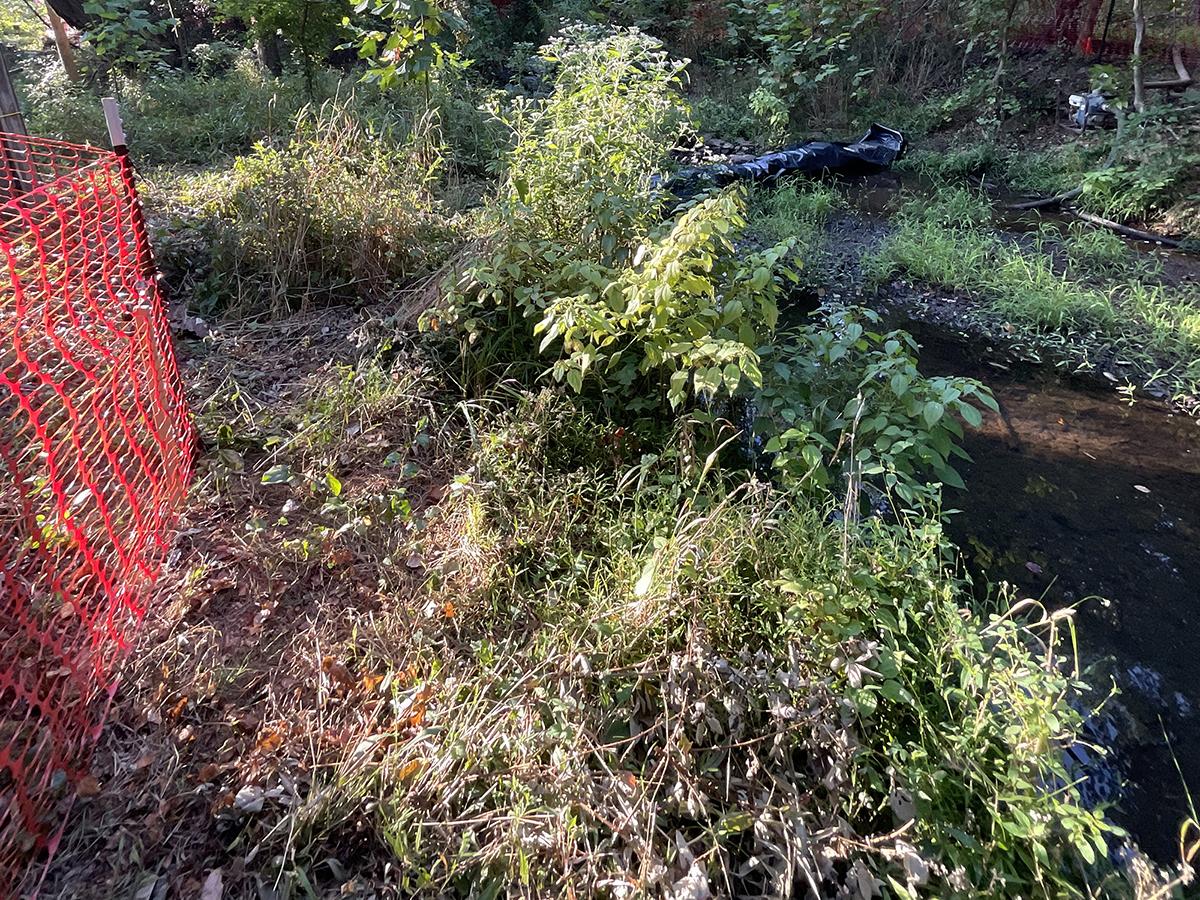
Facilities Management (FM) has completed the final phase of the Campus Creek restoration project, marking a significant recent milestone in a long-term effort to stabilize the creek, reduce environmental risk, and restore ecological health along this important campus waterway.
The Campus Creek restoration was made possible by a $1.7 million grant from the Maryland Department of Natural Resources through the Chesapeake and Atlantic Coastal Bays Trust Fund. With this funding in place, FM was able to move forward with restoration work that had been planned for years but could not proceed without dedicated financial support. With funding secured, FM turned its attention to addressing longstanding conditions along Campus Creek.
From Erosion to Restoration
The creek, which runs from behind Oakland Hall near University Avenue to its confluence with Paint Branch, had experienced years of erosion caused by repeated stormwater surges. Over time, these surges degraded the creek’s banks, increased water flow velocity, and carried sediment and excess nutrients into the waterway. As conditions worsened, wildlife habitat declined, and the risk of downstream impacts increased, making intervention increasingly necessary.
To address these conditions, FM implemented a multi-phase restoration approach, with the most recent phase completed in January. Like the earlier phases, this final phase focused on The final segment focused on reducing pollutant loads & nutrients from the banks, protecting and restoring ecological integrity, and increasing wetland acreage. The brush, pollutants, & debris have been removed, the creek was regraded, the banks have been stabilized, and fresh shrubs & trees have been planted. By restoring the creek, the local enhancements include increased recreational opportunities, increased learning and research opportunities, and positive University public relations. On a regional level, the water quality that drains into the Anacostia River and the Chesapeake Bay would have improved.
Extending the Impact Beyond the Creek
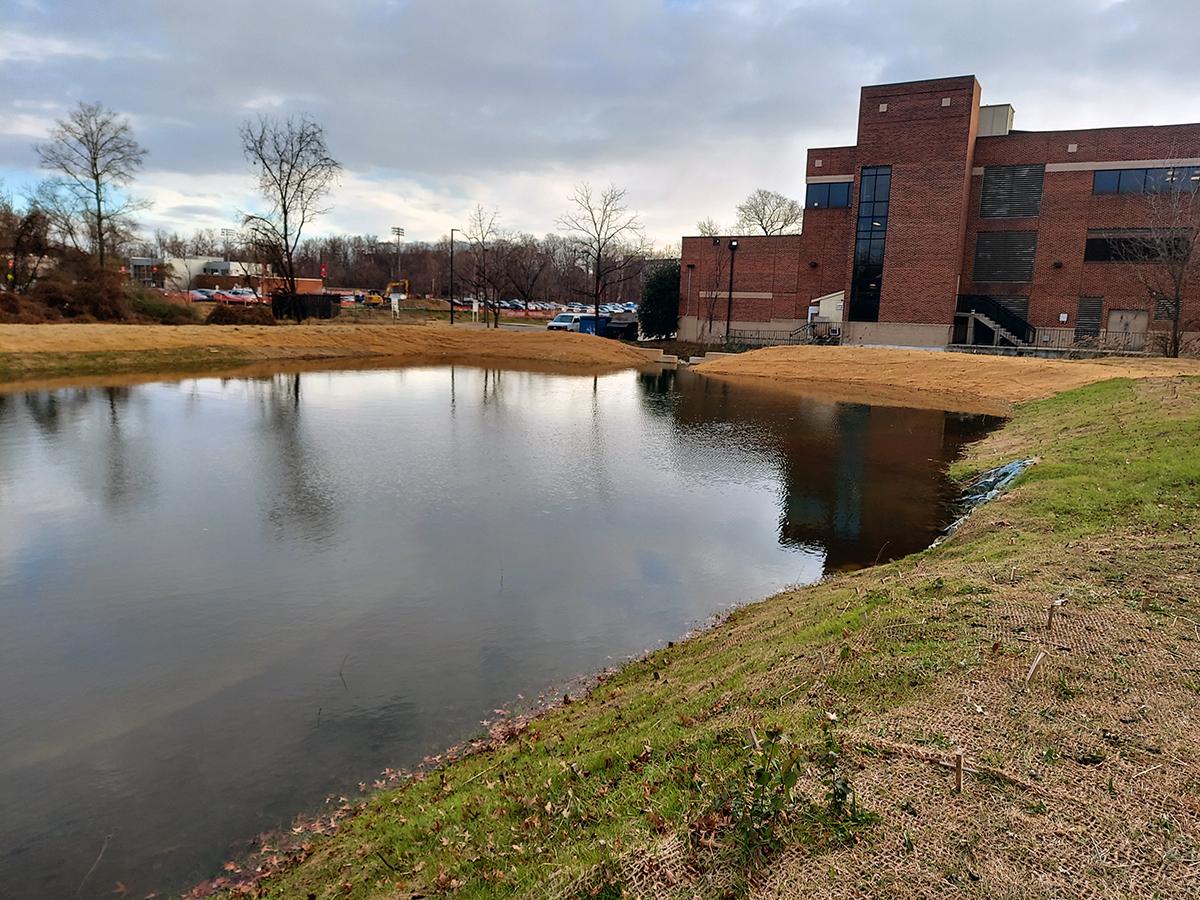
In addition to the creek work, the grant also supported improvements to a nearby retention pond located near the Animal Sciences and Agricultural Engineering Building. The pond collects stormwater runoff from surrounding impervious surfaces and campus agricultural areas before it flows into Campus Creek.
As part of the project, the pond was upgraded to function more like a wetland system, incorporating new plantings and sediment management features designed to improve water quality before runoff enters the creek. Together, the creek restoration and pond retrofit work as a connected system to reduce nutrient loads, slow stormwater, and protect downstream waterways.
Early Results and Visible Change
Earlier phases of the Campus Creek restoration produced encouraging results, including increased wildlife activity observed in and around restored sections of the creek. With the completion of the final phase and the addition of pond improvements, these ecological benefits are expected to continue as the system stabilizes over time. Campus users may notice clearer water, increased wildlife activity, and creek corridors that better integrate with surrounding green spaces.
Looking Ahead
With the restoration work now complete, the Campus Creek project reduces long-term erosion risks, improves water quality, and supports FM’s broader sustainability and environmental stewardship goals. By slowing runoff and filtering excess nutrients upstream, the project provides benefits not only to Campus Creek but also to Paint Branch, the Anacostia River, and the Chesapeake Bay watershed. Ongoing monitoring and maintenance will remain important to ensure the creek and pond continue to function as designed, particularly following major storm events.
For FM teams involved, the completion of the Campus Creek restoration represents a meaningful recent achievement—one that reflects sustained coordination, strategic investment, and a long-term commitment to caring for campus natural resources.