
The NextGen system is built around a combined heat and power (CHP) plant, also known as cogeneration. It produces electricity and useful thermal energy from a single fuel source — capturing and reusing energy that would otherwise be wasted.
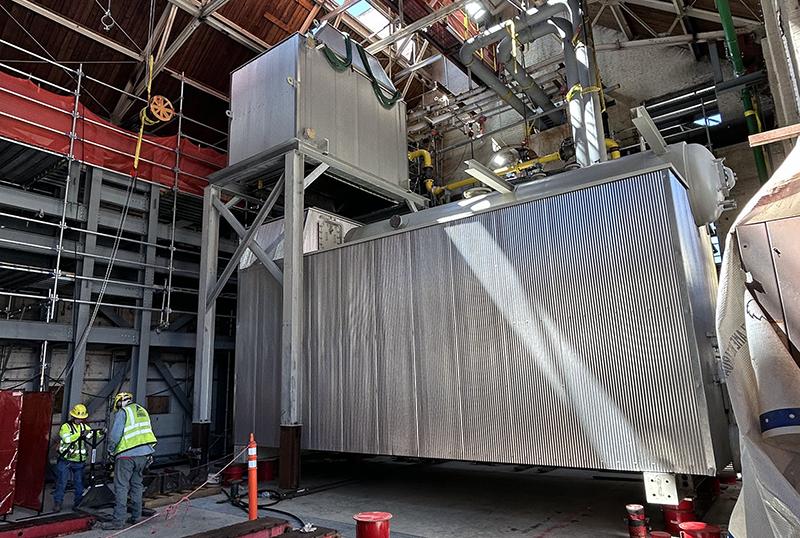
Generating Power and Capturing Energy
Electricity Generation (Combustion Turbine)
Natural gas (and backup fuel oil) is used to spin a turbine, which drives a generator to produce electricity—supplying approximately 50% of campus demand. Because this power is generated on-site, it reduces costs, minimizes transmission losses, and improves reliability.
Heat Recovery (HRSG System)
Instead of being released into the atmosphere, turbine exhaust—often exceeding 900°F (480°C)—is captured by a Heat Recovery Steam Generator (HRSG) to produce high-pressure steam. This process significantly increases efficiency, with CHP systems achieving 60–80%+, compared to ~35–40% for conventional power plants.
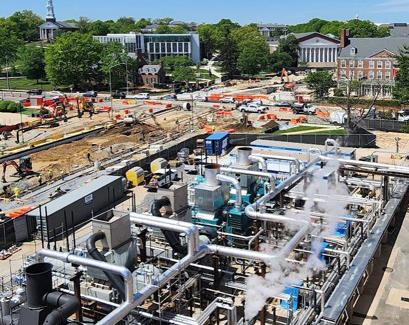
Distributing and Using Energy Across Campus
Steam Distribution and Use
Steam is distributed through an underground piping network and used across campus for:
- Space heating
- Domestic hot water
- Cooling via turbine-driven chillers
- Laboratory and research processes (e.g., sterilization)
- Humidity control
This makes steam a central energy carrier for campus operations.
Thermal Distribution Network
A campus-wide network of insulated underground pipes delivers steam to buildings and returns condensate to the plant. Ongoing upgrades are reducing heat loss, leaks, and maintenance issues—improving overall efficiency and reliability.
Cooling Systems: Steam and Electric Chillers
Cooling is provided through both legacy and modern systems. Steam-driven chillers use steam to produce chilled water and remain common across campus. New high-efficiency electric chillers, powered by CHP-generated electricity and the grid, offer greater flexibility and improved performance during periods of lower heating demand. This transition supports decarbonization and system flexibility.
Condensate Recovery System
After steam transfers heat, it condenses back into water (condensate), which is returned to the plant. This reduces the need for fresh water and lowers the energy required to reheat and treat it. Because condensate is already warm and purified, it requires less treatment and helps reduce overall water and sewer usage.
Why NextGen Is More Efficient
The key advantage of CHP is maximizing useful energy output from fuel:
| System Type | Typical Efficiency |
|---|---|
| Conventional Power Plant | ~35–40% |
| CHP (NextGen) | ~60–80%+ |
By capturing and reusing heat, the system reduces both fuel consumption and emissions.
Planning for the Future
Transition to Low-Temperature Hot Water
UMD is studying a shift from steam to low-temperature hot water systems operating at approximately 145°F. This would enable the use of electric heat pumps, improving efficiency and reducing emissions. While this approach requires larger infrastructure and higher upfront investment, it offers lower long-term energy use and emissions.
Integration with the Regional Grid (PEPCO)
The CHP plant works alongside the regional PEPCO electric grid to enhance resilience. It provides on-site generation, supplements grid power when needed, and helps stabilize energy supply during peak demand or outages.